Strategies For Improving Diversity, Equity, And Inclusion In The Transportation Planning Profession
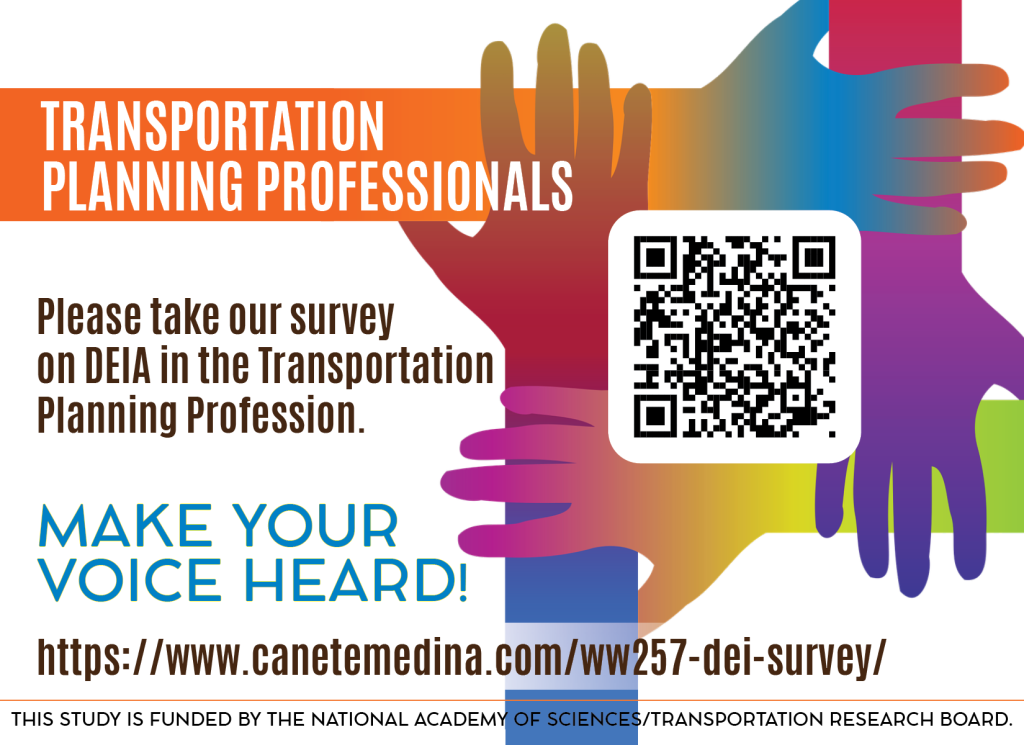
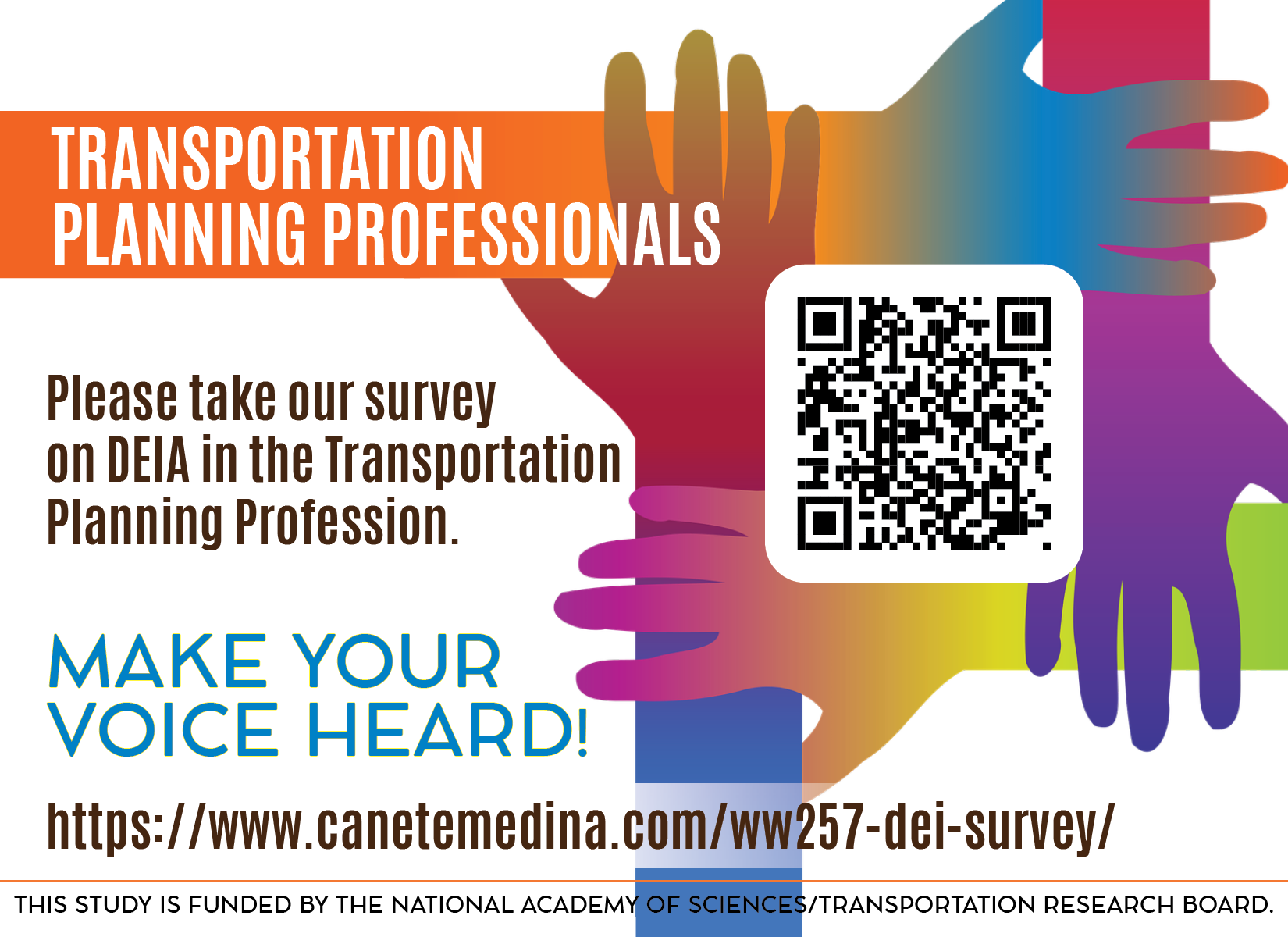
Canete Medina was selected to conduct a study for the National Academies of Sciences, Engineering, and Medicine, to identify meaningful and effective strategies for state departments of transportation (DOTs) and other transportation agencies to increase and sustain diversity, equity and inclusion of their transportation planning staff. Strategies included: recruitment, promotion, and retention of a diverse transportation staff, allocation of agency resources to support DEI goals and priorities, ensuring contributions by all staff are valued, increasing agency- wide accountability for DEI goals, building staff capacity in fostering respectful, welcoming and constructive professional relationships, and collaborating with educational institutions to sustain DEI for the future of the transportation planning profession. An online survey and interviews were conducted by Canete Medina as part of this study. The project was terminated as it did not align with the current administration’s policies and priorities.
Assessing The Equity And Workforce Mobility Implications Of The Expansion Of E-Commerce And Direct-To-Consumer Delivery Services
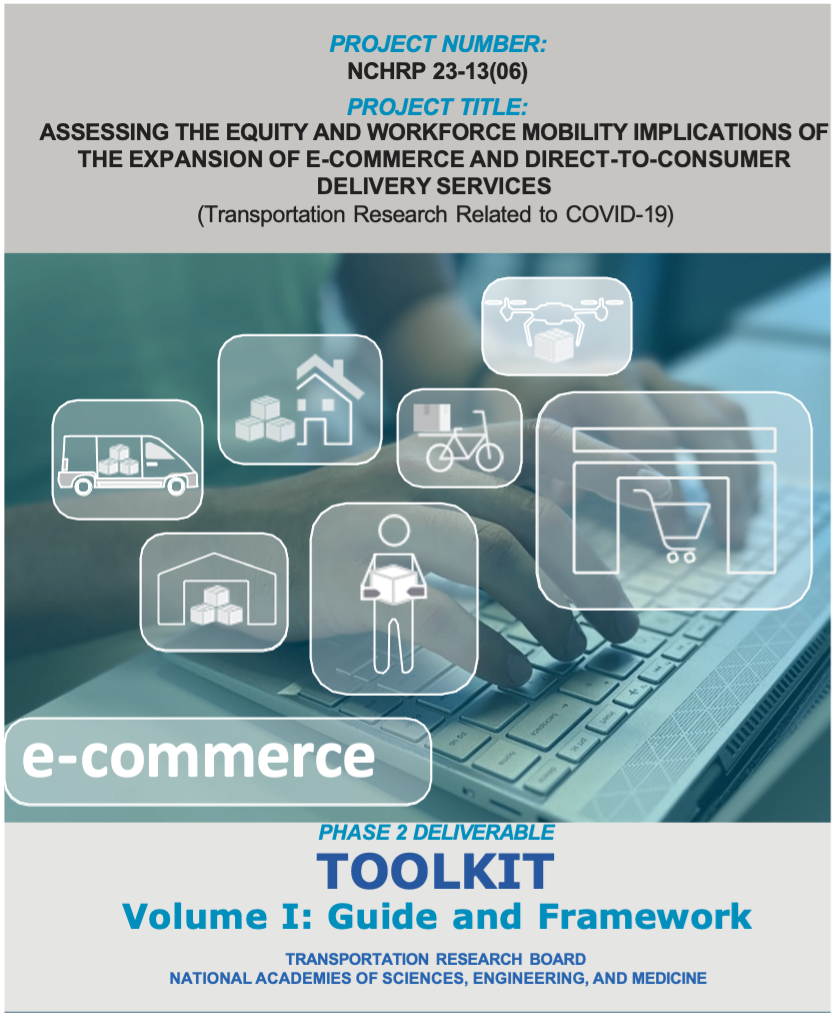
Canete Medina conducted a research study, funded by the National Academies of Sciences, Engineering, and Medicine, on the impact of e-commerce on workforce mobility and equitable access to goods. The study was under the auspices of the National Cooperative Highway Research Program. Isabel Cañete- Medina was the Principal Investigator.
The objectives of this research were to develop for state DOTs and their regional and local partners:
An objective understanding of (a) the full spectrum of ecommerce and direct-to-consumer deliveries with definitions, rameworks, and a taxonomy; and (b) an understanding of how and, to what extent, the rise of direct-toconsumer delivery services has created opportunities and challenges for workers and consumers in urban, suburban, and rural contexts, with emphasis on low/fixed- income, minority communities, individuals with disabilities, and the elderly;
Development of a toolkit with approaches and case studies that demonstrate how to proactively address the challenges and opportunities presented by the expansion of e-commerce and direct-to consumer deliveries. The toolkit and case studies should be quantitatively and qualitatively driven to increase equitable access and mobility for the workforce and consumers, including effective practices, partnerships, plans, policies, programs, strategies, funding options, or service delivery.
Canete Medina conducted an online survey, key-person interviews, a focus group, and a peer exchange forum as part of the stakeholder outreach activities for this research study.
In the Toolkit, SORTA was included as a case study in transit planning for job access to e-commerce facilities to address workforce mobility issues. We thank SORTA staff members who provided us with information regarding the transit service extension to the Amazon facility on River Road.